Advanced Hair Treatment

PRP Therapy for Hair Regeneration

A minimally invasive, autologous treatment that uses your own blood's natural growth factors to reawaken dormant hair follicles, increase hair density, and support the scalp's regenerative environment — backed by a growing body of published clinical evidence.

What Is PRP Therapy ?

Platelet-Rich Plasma — or PRP — is a concentration of your own blood’s platelets, prepared from a small sample drawn at the time of your appointment. Platelets are best known for their role in clotting, but they are also packed with growth factors — molecular signals that the body uses to repair tissue, stimulate cell growth, and promote healing. When these concentrated growth factors are delivered directly to the scalp, they may signal dormant or miniaturized hair follicles to become active again.

Because PRP is made entirely from your own blood, there are no foreign substances, no synthetic drugs, and no risk of allergic reaction to the treatment itself. It is one of the most natural regenerative approaches available in hair medicine today. PROGEN™ Renew uses a physician-supervised PRP preparation and delivery protocol, calibrated to maximize platelet concentration and ensure consistent, targeted delivery to the follicular areas of the scalp most affected by thinning or loss.

PRP Therapy for Hair Loss in Austin TX | Progen Trichology

What to Expect — The Procedure

Before Your Session
A small blood sample (10–20 mL) is taken from your arm at the start, similar to a routine test. No special preparation is needed.
Preparation
Your blood is spun in a centrifuge to separate platelets and growth factors, creating PRP concentrate rich in regenerative elements for follicles.
Delivery
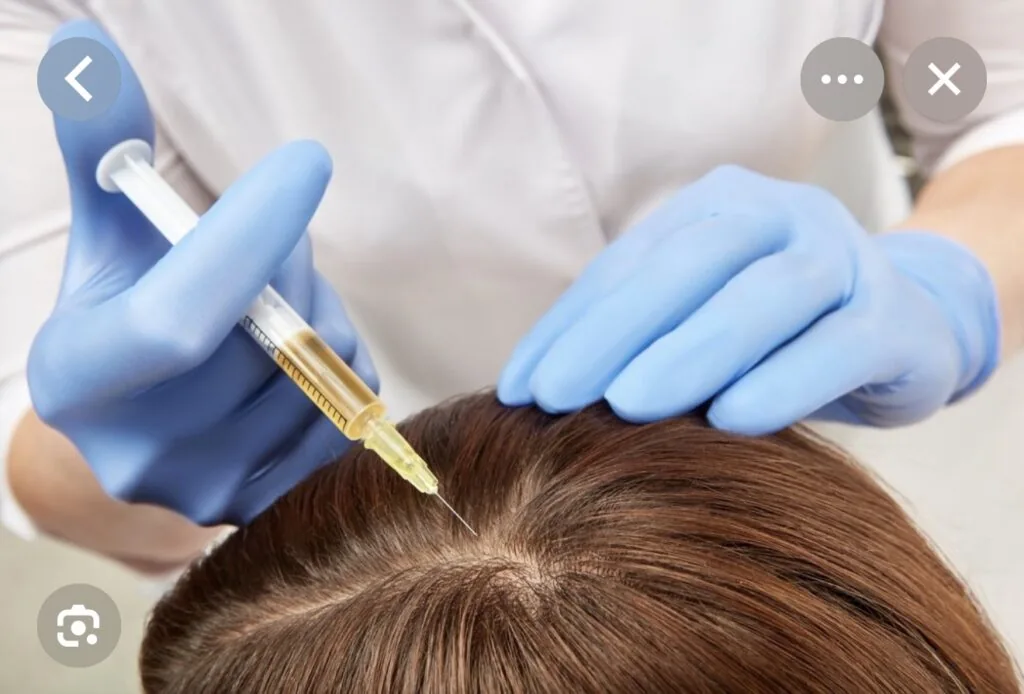
The PRP is injected into thinning scalp areas using fine needles. Discomfort is minimal, and the full procedure takes about 45–60 minutes to complete.
After Your Session
No downtime required. Mild redness may occur for 24–48 hours. Resume normal activities immediately, but avoid washing scalp for one day.

Treatment Protocol

PROGEN™ Renew is designed to achieve meaningful results with a minimal number of sessions.

Recommended Protocol
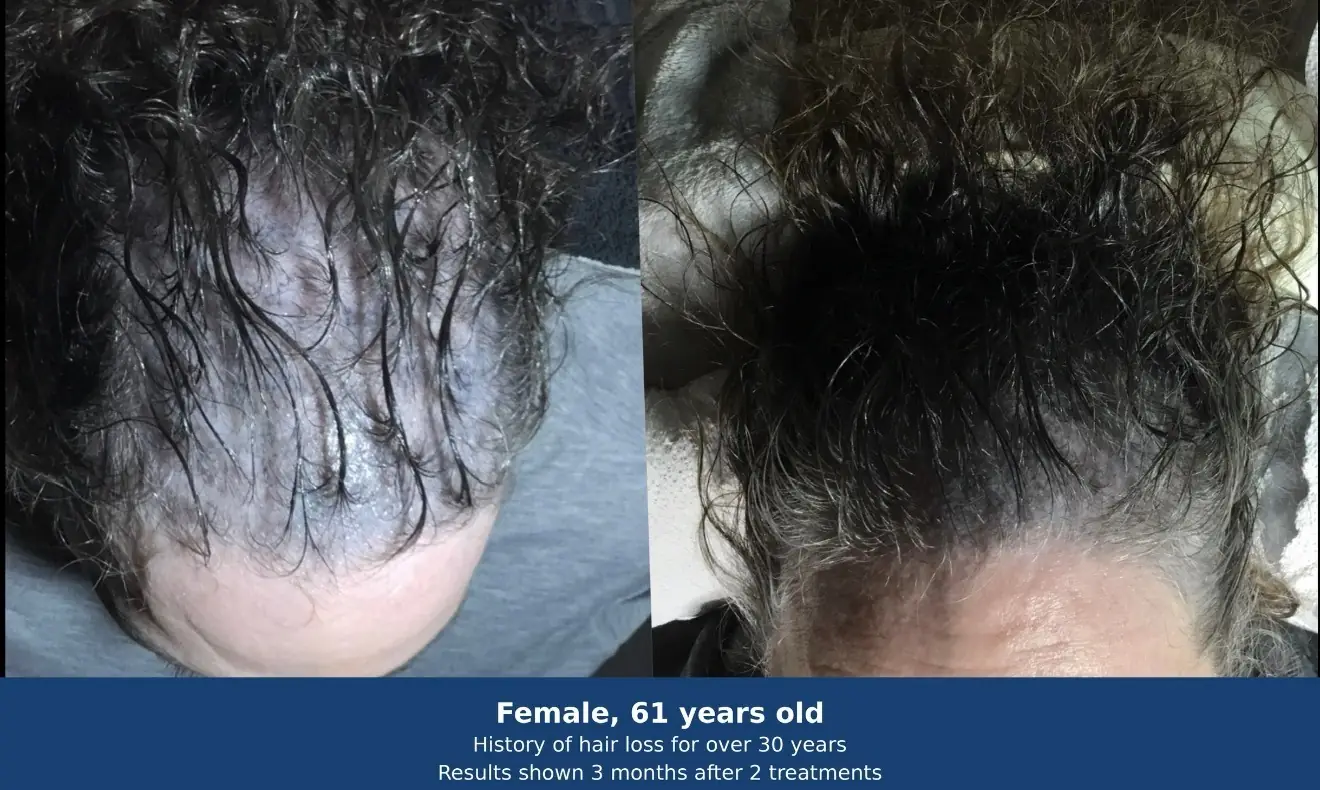
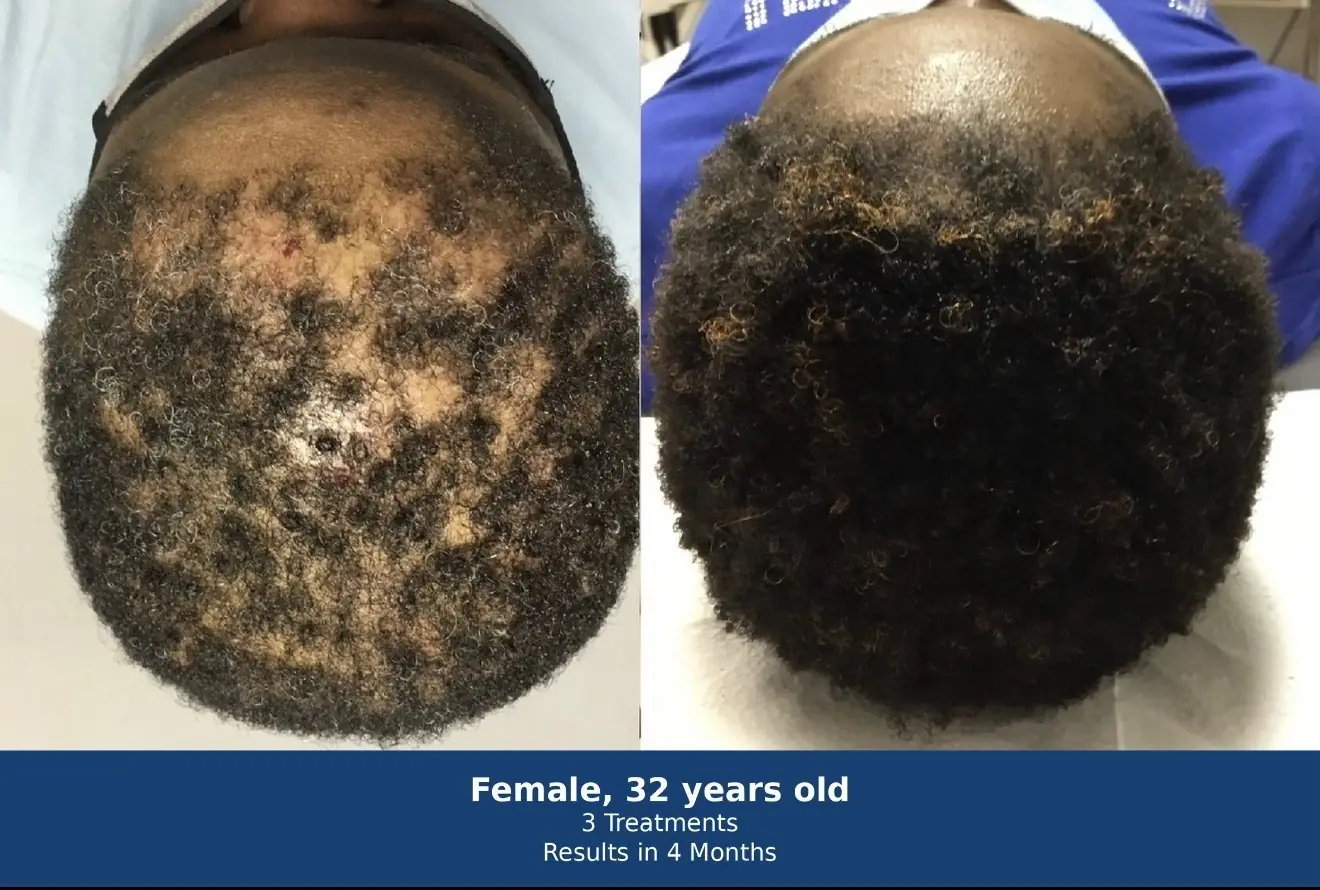
2 to 3 Sessions – Most patients complete their initial PRP treatment course in 2 to 3 sessions, spaced approximately 4 to 6 weeks apart. This spacing allows the biological response from each session to develop before the next treatment reinforces and builds upon it.
Session 1
Establishes the initial growth factor stimulus in the scalp. Follicular response typically begins gradually over 4 to 8 weeks as the growth factors exert their effects on the dermal papilla and perifollicular tissue.
Session 2
Performed approximately 4 to 6 weeks after Session 1, this session reinforces the regenerative signal and deepens the follicular response. Many patients begin to notice reduced shedding and early improvements in density around this time.
Session 3 (if indicated)
For patients with more advanced thinning, a third session may be recommended to consolidate results and extend the duration of the treatment effect.
Maintenance
Following the initial course, a maintenance session every 6 to 12 months is typically recommended to sustain the follicular environment improvements over time.

How PRP Works in the Scalp

When PRP is injected into the scalp, concentrated growth factors interact with the cells of hair follicle and its surrounding tissue in several ways:

01.

Activating the Dermal Papilla
PRP growth factors directly stimulate the dermal papilla, the key cell cluster at the base of each hair follicle that regulates its growth cycle. Important factors like PDGF, VEGF, EGF, and IGF-1 signal these cells to multiply, resist damage, and restore their role as the follicle’s growth command center, promoting healthier, stronger hair.

02.

Moving Follicles From Rest to Growth

PRP helps transition hair follicles from the resting phase (telogen) back into the active growth phase (anagen). By stimulating dermal papilla activity and boosting local blood supply, it can reactivate follicles that have slowed or become dormant, supporting renewed hair growth in areas affected by thinning or androgenetic alopecia.

03.

Reducing Follicular Inflammation
Chronic low-grade inflammation around the hair follicle is a significant but underrecognized driver of androgenetic alopecia. PRP contains anti-inflammatory cytokines that may help reduce this perifollicular inflammation, creating a calmer and more receptive environment for follicular regeneration.

04.

Increasing Blood Supply to the Follicle
VEGF, one of the most important growth factors concentrated in PRP, effectively stimulates new blood vessel formation around hair follicles, significantly enhancing blood flow and delivering vital oxygen and nutrients. This process helps sustain healthy, active hair growth and revitalizes follicles that may have weakened, slowed, or become dormant over time.

05.

Supporting the Extracellular Matrix
The structural scaffolding of the scalp — made up of collagen, fibronectin, and laminin — provides the physical anchor for each follicle and the signaling environment for follicular stem cells. PRP growth factors including TGF-beta and PDGF may stimulate fibroblast activity and support collagen synthesis, helping to maintain and rebuild this structural foundation.

Key Benefits

Your Own Biology
PRP is made entirely from your own blood. There are no synthetic drugs, no foreign substances, and no risk of allergic reaction. It is one of the most biocompatible treatment options available.
Directly Targets Root Cause
Rather than masking hair loss, PRP delivers growth factors directly to the follicle — addressing the cellular and vascular environment that determines whether a follicle grows or miniaturizes.
Clinically Studied
PRP for hair loss is one of the most researched regenerative treatments in dermatology, with dozens of published trials and multiple meta-analyses supporting its effect on hair density in androgenetic alopecia.
Minimally Invasive
No surgery, no incisions, no general anesthesia. Most patients return to normal activity the same day with minimal downtime.
Comparable to Conventional Treatments
Multiple trials show PRP results are comparable or superior to topical minoxidil, with significantly better tolerability and side effect profile.
Synergistic With PROGEN™ Modalities
PRP works well combined with microfocused ultrasound, peptide therapy, or exosomes. Each modality reinforces the others — ultrasound improves scalp penetration, while PRP provides the growth factor stimulus.
Suitable for Men and Women
PRP has been studied in both male and female pattern hair loss and shows meaningful results in both populations, though protocols may differ.

What the Research Says?

PRP for hair loss is one of the more extensively studied regenerative treatments in dermatology, with dozens of randomized controlled trials and multiple published meta-analyses. Here is an honest, balanced summary of what the evidence shows: The majority of published studies and meta-analyses demonstrate that PRP is effective at increasing hair density in patients with androgenetic alopecia, with statistically significant results compared to placebo. The evidence for improvements in hair thickness is less consistent across studies. PRP has shown results comparable to topical minoxidil in several direct comparison trials, and some studies show it may be superior in reducing hair shedding. The quality of results appears to depend significantly on the PRP preparation method, platelet concentration, activation status, and injection technique — which is why protocol standardization matters. As with all off-label treatments, the overall evidence base is still developing and more large-scale standardized trials are needed to fully define the optimal protocol and patient selection criteria.

Start Your Hair Restoration Journey

Schedule a personalized consultation with our clinical team to determine your treatment plan.
Scroll to Top