Advanced Hair Treatment · PROGEN™ Revive

Microfocused Ultrasound Hair Restoration.

Microfocused ultrasound (MFU) is a non-invasive treatment that delivers focused ultrasound energy to the layers of the scalp where hair grows — stimulating dormant follicles and follicular stem cells without needles, surgery, or downtime. The PROGEN™ Revive protocol targets precise dermal depths, rebuilding the scalp's regenerative microenvironment and supporting sustained regrowth through your body's own repair mechanisms.

Physician-supervised Dr. Malini Kumar, MD Patented protocol Evidence-based
Microfocused ultrasound scalp treatment at PROGEN

The technology

What is microfocused ultrasound (MFU)?

Microfocused ultrasound is a non-invasive, energy-based technology that delivers precisely controlled acoustic energy to targeted depths within the skin — without cutting, injecting, or disrupting the surface of the scalp. Unlike traditional ultrasound used for imaging, MFU delivers therapeutic energy in concentrated focal points that generate controlled biological responses deep within the dermal tissue.

MFU is best known for its FDA-cleared applications in skin tightening and facial lifting. A growing body of published research suggests that the same biological mechanisms — neocollagenesis, extracellular matrix remodeling, fibroblast recruitment, and vascular stimulation — are directly relevant to the health and regeneration of hair follicles in the scalp.

PROGEN™ Revive uses a motion-based microfocused ultrasound protocol applied to the scalp, targeting the key dermal depths where follicular structures and their supporting tissue reside. Each session is customized to your pattern of hair loss, scalp characteristics, and goals.

Precision at depth

How deep does the ultrasound energy reach?

Without breaking the skin's surface — exactly where follicular structures live.

1.5mm
Papillary Dermis
3.0mm
Reticular Dermis
4.5mm
Hypodermis / SMAS

Real results

What results do real patients see?

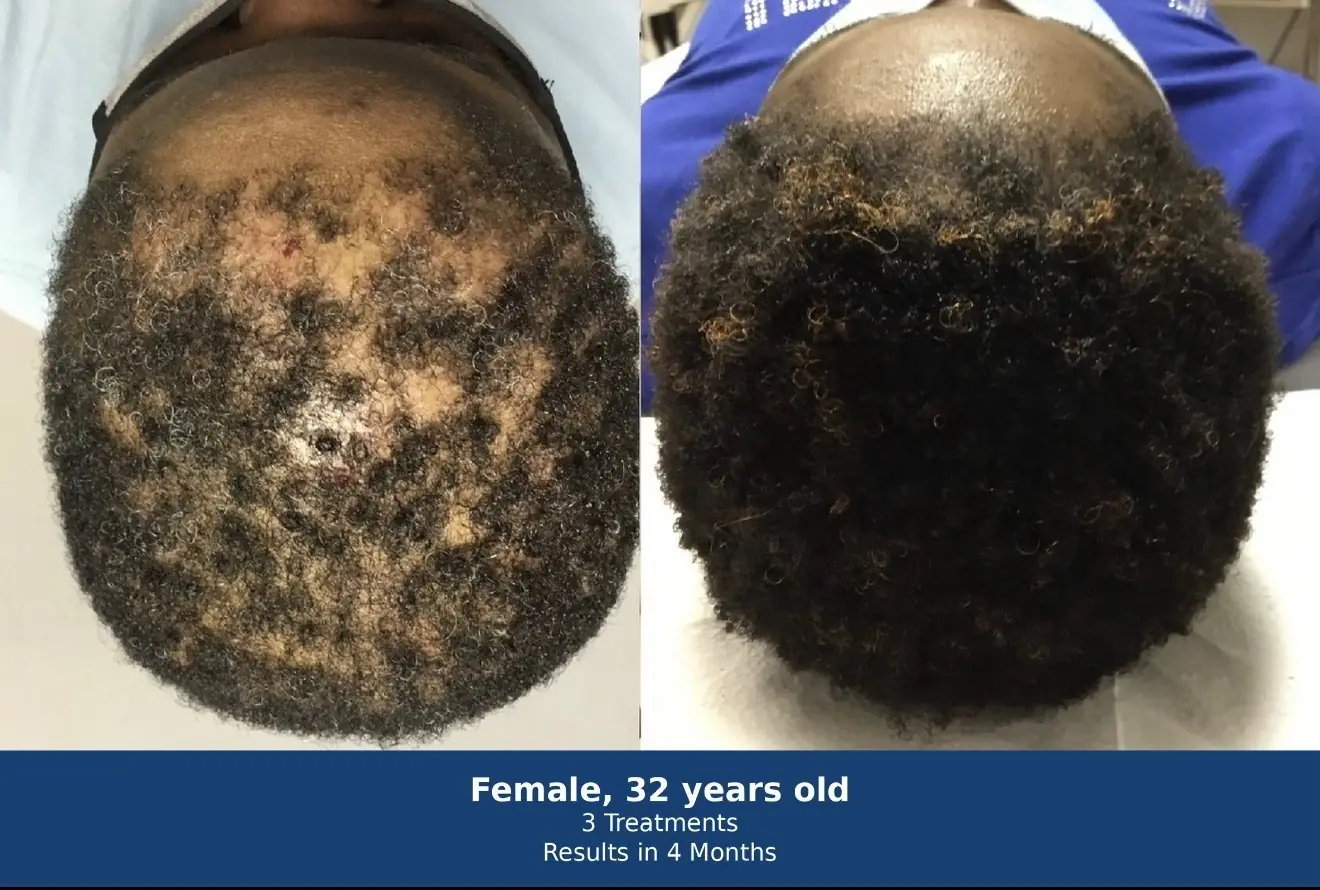
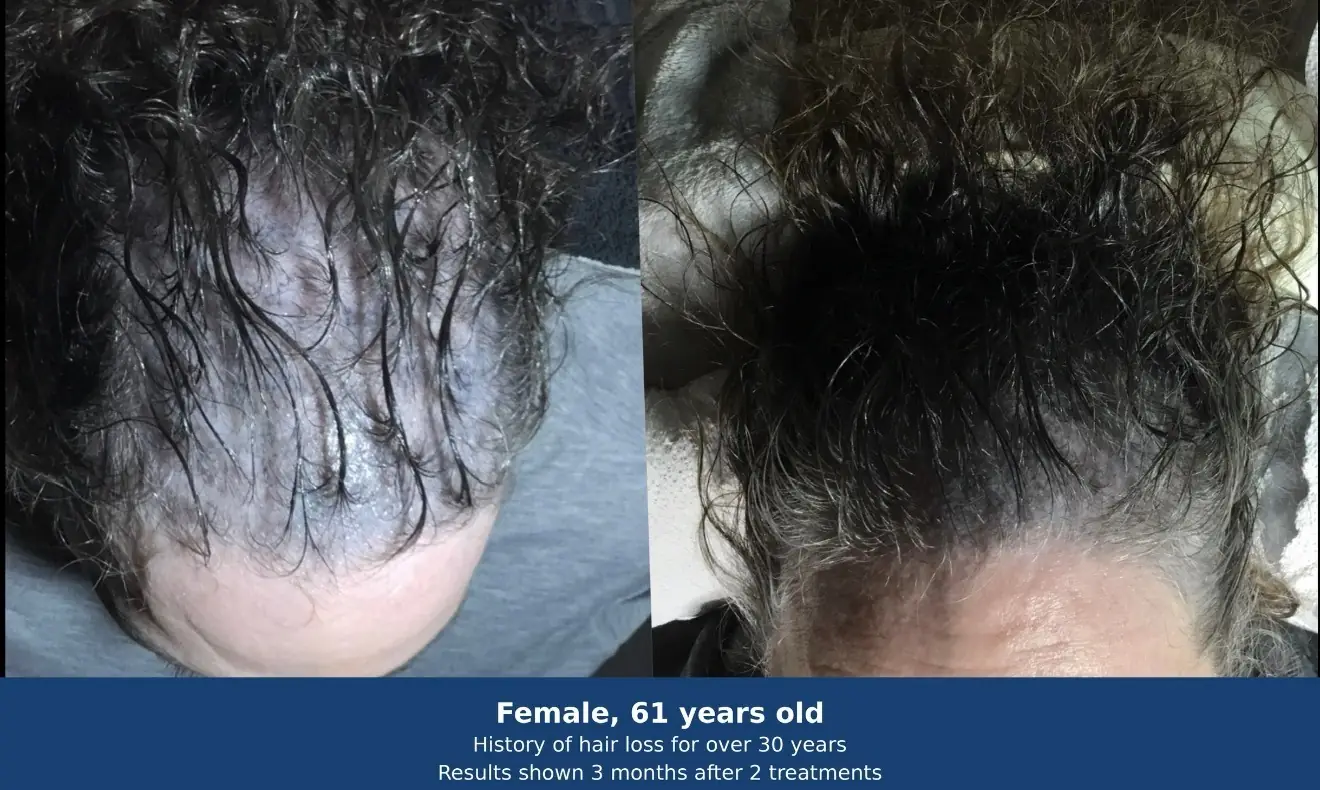
Actual PROGEN™ patients. Individual results vary.

Hair regeneration before and after
Female, 61 · 2 treatments · 3 months
Hair regeneration before and after
Female, 32 · 3 treatments · 4 months

Compare treatments

MFU vs. PRP vs. red light — which is right for you?

Three non-surgical paths to healthier hair — often combined in one regenerative plan.

✦ Flagship

Microfocused Ultrasound

How it worksFocused ultrasound energy reaches the scalp layers where follicles live, stimulating dormant follicles to regenerate.
Needles or surgeryNone — non-invasive, no needles for the core treatment.
Typical course3–6 sessions, about 60 minutes each.
DowntimeNone.
Role in your planThe flagship PROGEN™ treatment for waking dormant follicles.
Microfocused ultrasound hair restoration
Often combined

PRP Therapy

How it worksGrowth factors concentrated from your own blood are delivered to the scalp to stimulate regeneration.
Needles or surgeryA small blood sample; platelets are then delivered to the scalp.
Typical courseA series of sessions, followed by periodic maintenance.
DowntimeReviewed at your consultation.
Role in your planOften combined with MFU for enhanced results.
PRP therapy for hair regeneration
Supportive

Red Light Therapy

How it worksLow-level laser or LED light (photobiomodulation) stimulates follicle cells at the cellular level.
Needles or surgeryNone — non-invasive and painless.
Typical courseConsistent treatment as part of a combined protocol.
DowntimeNone — no recovery period.
Role in your planSupports the healing rhythm between MFU sessions.
Red light therapy for hair

Not sure where to start? Treatments are often combined — bioactive peptide therapy is frequently paired with MFU, PRP, or red light — and every plan begins with a free consultation and scalp analysis.

Common questions

Microfocused ultrasound FAQ.

What is microfocused ultrasound for hair restoration?
Microfocused ultrasound (MFU) is a non-invasive treatment that delivers focused ultrasound energy to the layers of the scalp where hair grows. It stimulates dormant follicles to encourage regeneration — without needles, surgery, or downtime.
Does microfocused ultrasound hurt?
Most patients describe the treatment as comfortable, with only a warm or tingling sensation. Because it's non-invasive, there are no needles for the core MFU treatment and no recovery time afterward.
How is this different from a hair transplant?
Unlike a hair transplant, microfocused ultrasound is completely non-surgical. There's no cutting, no extraction of follicles, no shedding, and no downtime. It works by reactivating your existing follicles rather than relocating them.
How long until I see results?
Hair regeneration is gradual because follicles cycle naturally. Most patients begin noticing changes over several months as treated follicles move into active growth.
Am I a candidate for microfocused ultrasound hair restoration?
Many people with thinning hair or early-to-moderate hair loss are good candidates. The best way to know is a free consultation with our team, where we perform a scalp analysis and recommend the right protocol for your situation.
Does microfocused ultrasound work for women?
Yes. Microfocused ultrasound is used for both women and men — pattern hair loss (androgenetic alopecia) affects both, and PROGEN's before-and-after results include female patients in their 30s and 60s. A free consultation with a scalp analysis determines whether MFU fits your specific pattern of loss.
How many sessions of microfocused ultrasound will I need?
A typical course is 3–6 sessions, with each treatment taking about 60 minutes and no downtime. Hair returns naturally over 4–8 weeks per session, and your exact plan is set after a scalp analysis at your free consultation, so the protocol matches your pattern of loss.
What does a scalp analysis involve?
A scalp analysis maps your scalp with GRO trichoscopy to pinpoint the grade and pattern of your hair loss before any protocol is chosen. It's the diagnosis-first step in every PROGEN plan — treatment is built for you, not a guess — and it's part of the free consultation.

Start with a diagnosis.

Book a free scalp evaluation and find out whether microfocused ultrasound is right for you.